Research
Computational methods for heritage, structures and materials
My research connects numerical methods in structural mechanics with the study of existing buildings and construction materials. The work ranges from survey data and automatic model generation to finite-element formulations, coupled degradation models and experimental characterisation.
Modelling cultural heritage from survey to structure
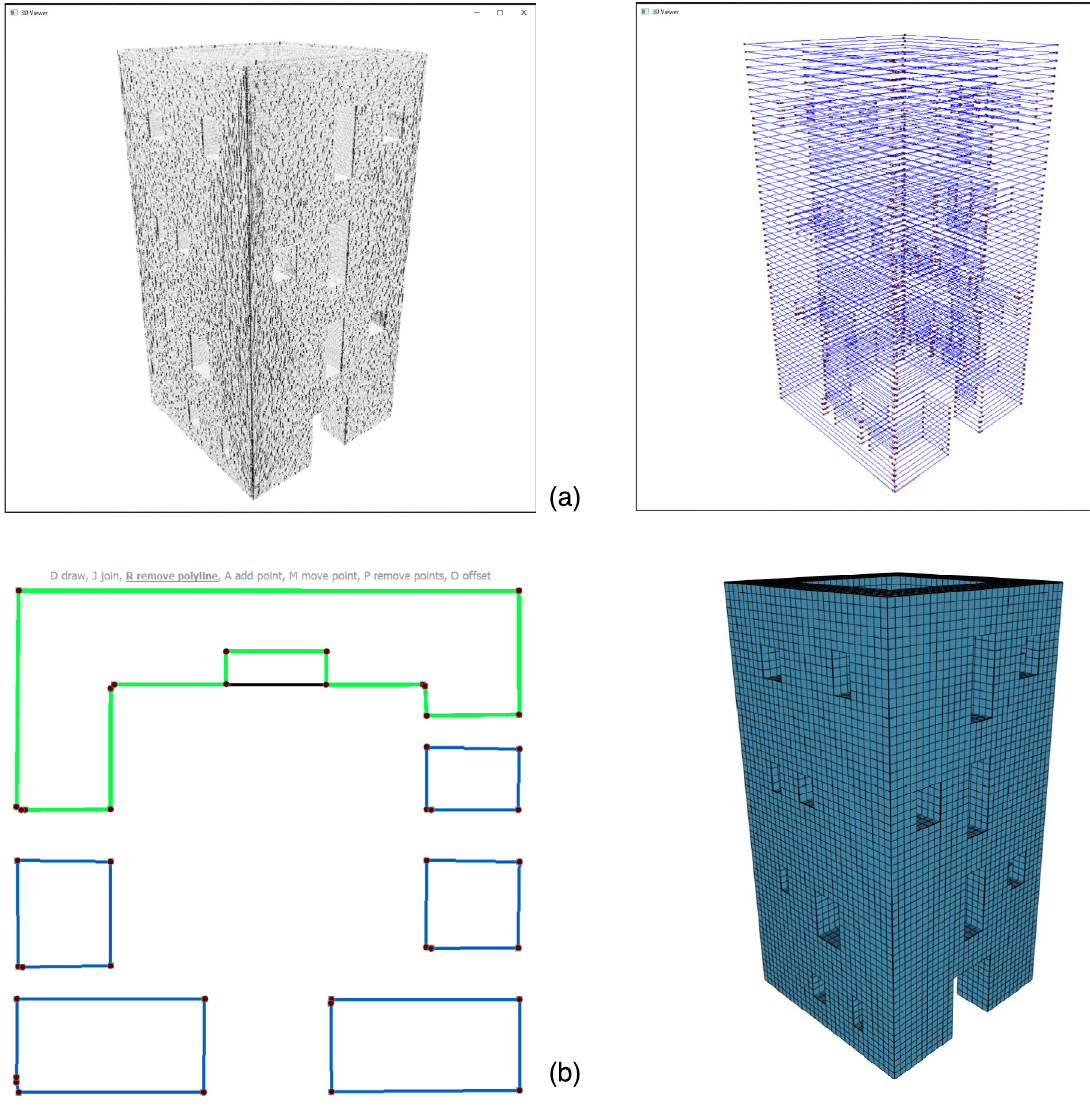
Point clouds, photogrammetry and BIM provide different views of an existing structure. I develop workflows that turn these records into analysis-ready models, then use those models to investigate structural behaviour, damage and conservation questions. Applications include towers, walls, vaults, bridges and complex historic buildings.
Selected work: Cloud2FEM: a finite-element mesh generator based on point clouds (2022); numerical modelling-based damage diagnostics (2023); FE and BIM modelling from point-cloud transformation (2025).
Digital twinning and structural ontologies
Structural digital twins bring together finite-element models, monitoring measurements, survey data and asset records. Ontologies and semantic data models can make the meaning and provenance of these different sources explicit, so that data remain connected and traceable as a structure is surveyed, modelled, analysed and monitored. This line develops methods and software for organising that information and linking it to structural models, with a focus on digital twins of existing and historic buildings.
Selected work: Integrating BIM and cloud-based solutions for cultural heritage management (2023); FE and BIM modelling from point-cloud transformation (2025).
Adaptive and reliable finite-element procedures
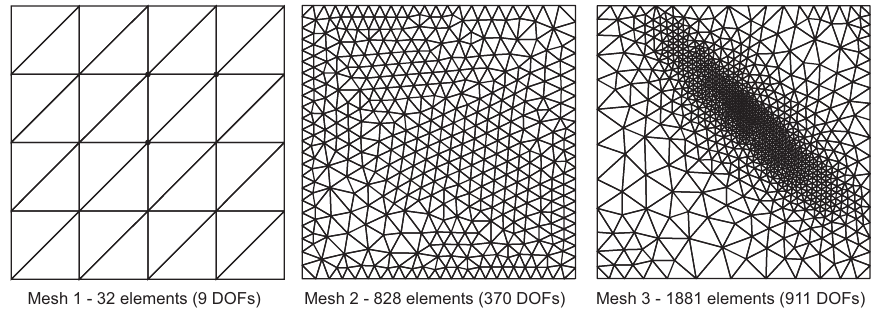
This line concerns the procedures that make finite-element analyses accurate and practical: recovery by compatibility in patches (RCP), a-posteriori error estimation, adaptive refinement and automated assessment workflows. The aim is to direct computation to the regions that govern the response and to make complex analyses more repeatable.
Selected work: Adaptivity based on recovery by compatibility in patches (2010); an automated two-step procedure based on adaptive limit and pushover analyses (2021); force-displacement descriptions of masonry collapse mechanisms (2020).
Finite-element formulations for plates, shells and beams
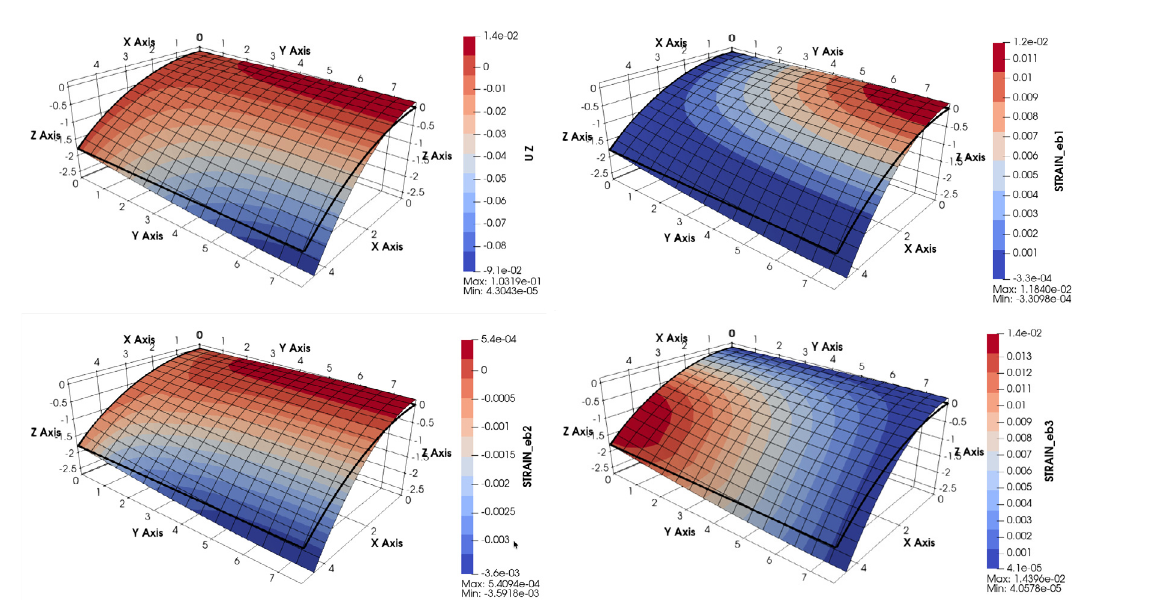
I develop finite elements that remain accurate and stable under bending, transverse shear, material nonlinearity and mesh distortion. This includes the nodally integrated plate element (NIPE), patch-averaged assumed-strain elements (PASE), the Q4RS Reissner–Mindlin shell, and beam elements with semi-rigid connections.
Selected work: The NIPE-based nine-node plate element (2012); PASE elements for stress analysis (2012); the Q4RS shell element (2026); shear-deformable beams with semi-rigid connections (2012).
Multiphysics of salt transport and material degradation
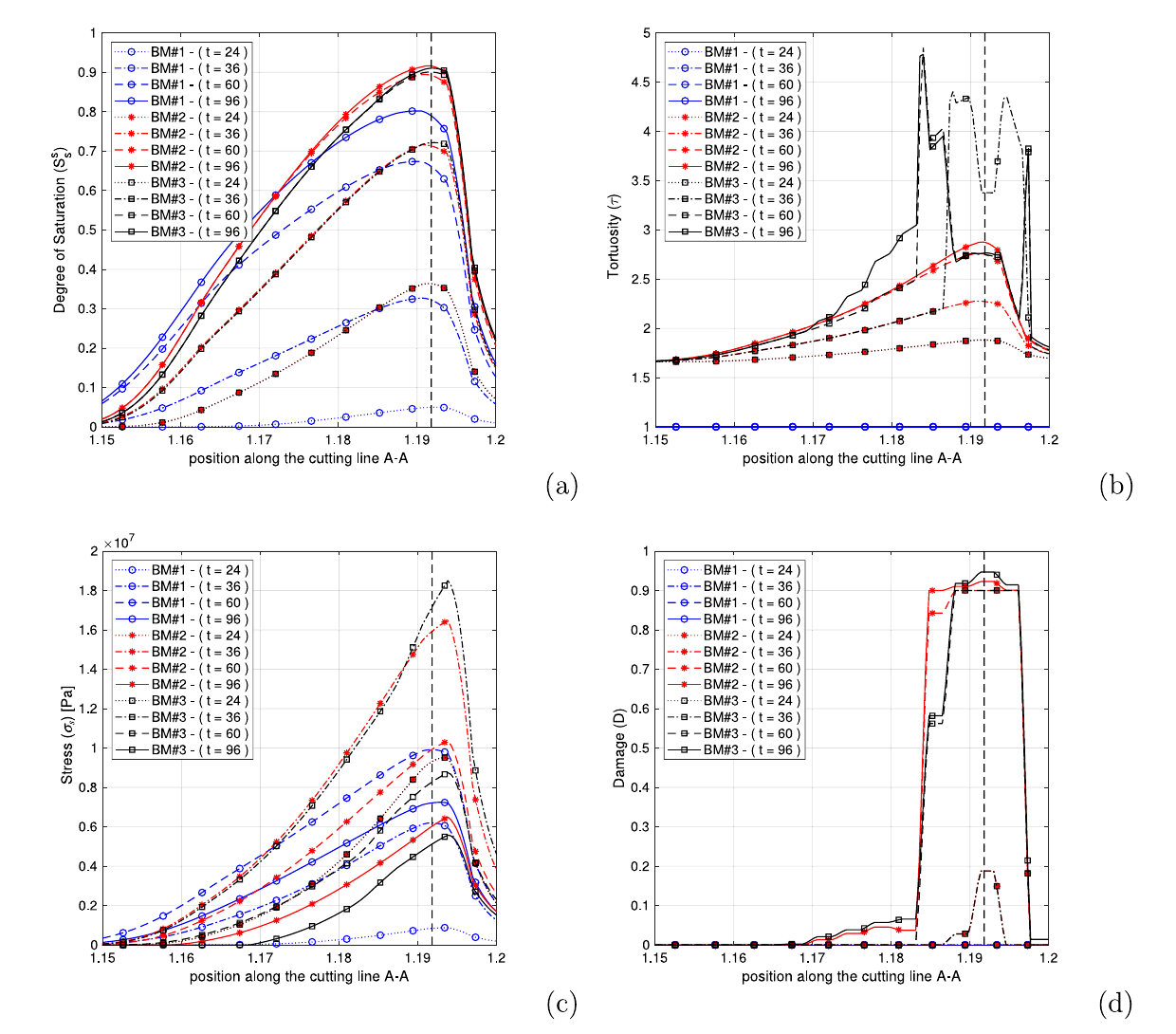
Salt weathering links moisture and heat transport, ion movement, crystallisation and mechanical damage. I study coupled and staggered multiphysics models that connect these processes across scales, from porous materials to masonry walls and retaining structures, to understand how environmental exposure changes material properties and structural response.
Selected work: A coupled multiphase model for hygrothermal analysis and salt-crystallisation stress (2013); a staggered multiphysics framework for salt-induced damage (2021); multiphase modelling of salt weathering in masonry retaining walls (2025).
Sustainable and innovative construction materials
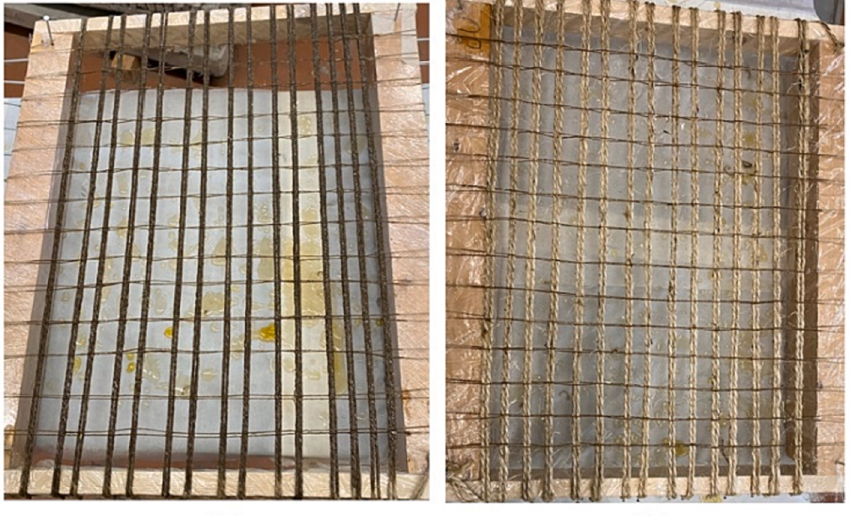
This line combines experimental characterisation with numerical modelling to evaluate lower-impact materials for construction, strengthening and compatible repair. Recent work studies sand-free mortars using olive-kernel aggregate and fabric-reinforced cementitious matrix (FRCM) composites. Collaborative work with Luis Mercedes studies the contributions of the fabric and cementitious matrix to tensile behaviour.
Selected work: Sand-free olive-kernel aggregate mortars (2026); matrix and fabric contributions in FRCM composites (2023); environmental ageing of masonry strengthened with composites (2019).